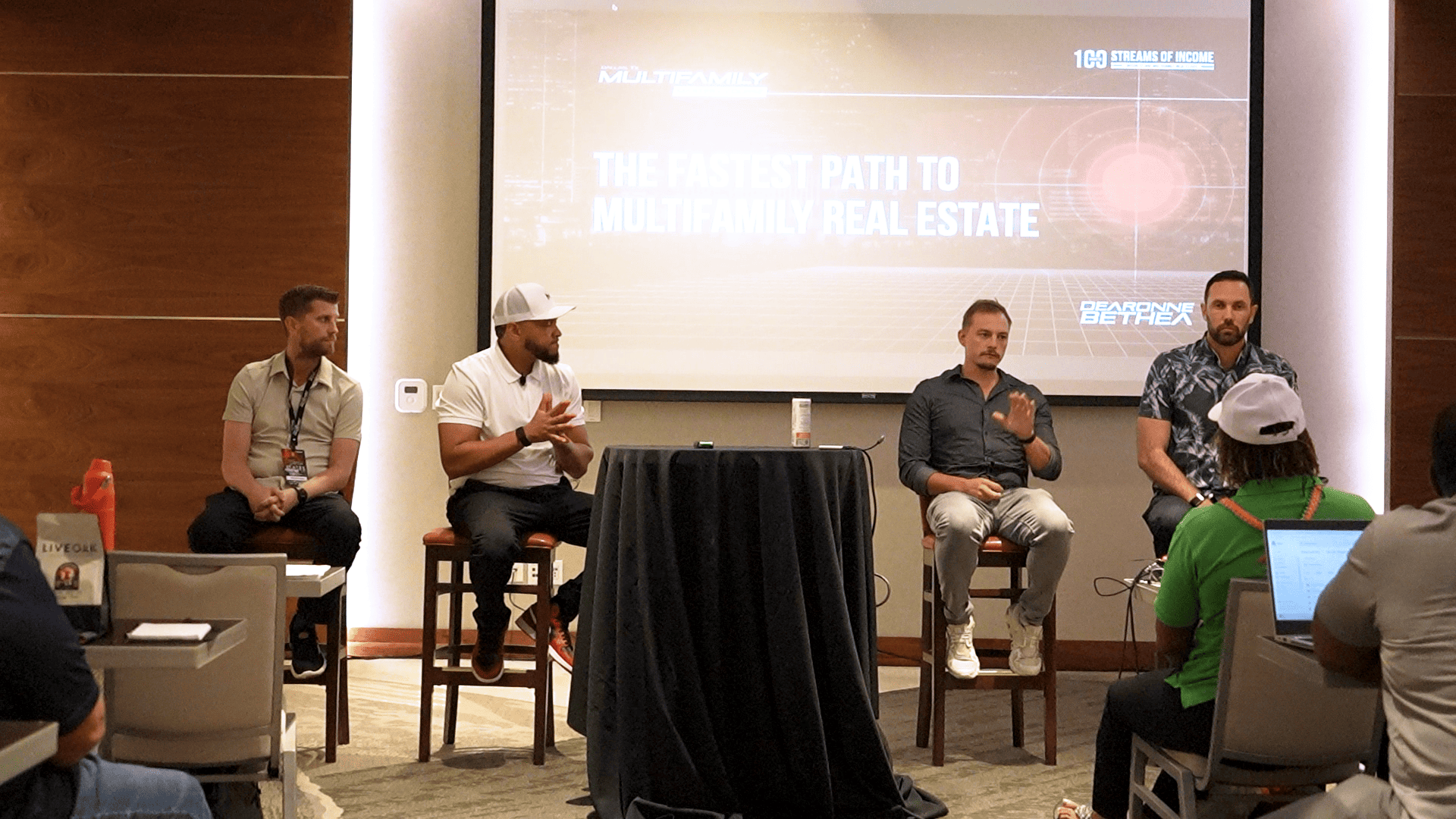
Most real estate agents know how to sell homes — few know how to build wealth. That’s the hard truth that Dearonne Bethea and Duke, the principal broker at Blueprint Real Estate Advisors, uncover in this episode of the DB Business Blueprint Podcast.
They explain why most agents stay stuck on the “commission hamster wheel” — chasing one deal after another — and how the smartest ones use their income to create passive wealth through multifamily investments, leverage, and tax strategy.
From Commissions to Cash Flow
“The blueprint isn’t just about earning commissions,” Duke explains. “It’s about turning active income into passive income and building generational wealth.”
At Blueprint, agents aren’t just trained to sell homes — they’re mentored to think like investors. The idea is simple: take your commission checks and put them into assets that generate long-term returns, such as multifamily properties or syndication deals.
Bethea shares how he built a portfolio of $70 million in real estate and manages nearly 600 doors nationwide — all starting from active income. “We practice what we teach,” he says.
The Real Estate Professional Advantage
Many agents don’t realize that by qualifying as a Real Estate Professional for tax purposes, they can offset income and pay minimal taxes. To qualify, agents must spend at least 750 documented hours a year working in real estate and make it their primary occupation.
Once they do, they can use passive losses from investments (like multifamily syndications) to offset active income from commissions — a strategy that lets top producers keep more of what they earn.
“It’s one of the most tax-efficient things you can do,” Duke says. “You control how much tax you pay.”
Investing Beyond Hawaii
Even in high-cost markets like Hawaii, opportunities exist. Bethea and Duke highlight strategies like:
- Live-in flips: renovate your primary home and sell tax-free.
- Pre-construction buys: profit from appreciation before completion.
- House hacking: rent out parts of your home (legally) to cover your mortgage.
Bethea adds, “Real estate never goes to zero. Stocks can — property doesn’t.”
For agents who can’t afford to buy locally, investing in multifamily syndications elsewhere lets them still participate in the wealth-building game — often with as little as $25,000 to $50,000 through Blueprint’s partnership with Tri City Equity Group.
The Power of Leverage
Leverage isn’t just about money — it’s about people and systems. Duke emphasizes outsourcing and virtual assistants (VAs) as a key to scaling:
“Leverage your time. My full-time VA handles my admin tasks, freeing me to focus on deals.”
By building systems and delegating tasks, agents can turn their solo hustle into a real business — one that grows even when they’re not grinding.
Why Most Agents Stay Stuck
Despite massive income potential, many agents fail to invest or grow wealth. Bethea explains:
“It blows my mind how many agents sell property every day but don’t own any. They don’t know how to snowball their income, double it, or minimize taxes.”
The reason? Lack of mentorship and exposure. Most work in traditional brokerages focused on sales, not strategy. Blueprint bridges that gap — teaching agents how to transition from realtor to investor.
Scaling Together
Through Tri City Equity Group, the Blueprint team invites agents to co-invest in multifamily deals — earning depreciation benefits, cash flow, and ownership equity without landlord headaches.
These aren’t just theoretical numbers. Bethea and Duke have personally exited six large multifamily projects, delivering up to 70% investor returns — even in today’s market.
The Future of the Industry
The duo also touches on the recent NAR lawsuit and how changes in commission disclosure may impact buyer agents. But they believe human nature — and the need for great agents — won’t change.
“The agents who know how to adapt, leverage, and invest,” says Bethea, “will thrive no matter what the market does.”